

Resilience
Somebody asks what the best system is. And I say: define best.
Senior leaders shaping the future of hospitality, on the decisions, pressures and people behind the numbers.

The Introduction
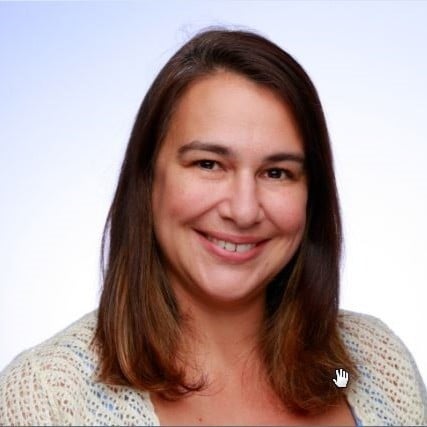
Debbie Thomas answers the call from Dedham Vale, halfway through deflating a kayak with her sons. She has been on holiday all week and has quietly decided that an interview is the more restful option. It tells you something about how she works: given the choice between the thing in front of her and the thing that needs thinking about, she will usually pick the thinking.
She grew up on stories about her parents' country club, started behind a bar at eighteen, and spent fifteen years running pubs before an accidental turn into business analysis. That combination is rare. Most people in hospitality technology have come from technology. Debbie came from the floor, and she has never entirely left it.
What she brings to Ottolenghi is a discipline the industry mostly does without: define the problem, gather the requirements, then, only then, go and look at products. It sounds obvious. Her point is that almost nobody does it, and that the cost of not doing it is about to get a great deal higher.
What is Ottolenghi?
The London group of delis and restaurants founded by Yotam Ottolenghi, famous for abundant, vegetable-led, boldly flavoured food, piled high in the window and cooked with whatever is in season.
From the first Notting Hill deli it has grown into restaurants and shops across the city, a bestselling shelf of cookbooks, and a pantry range of jars and spices, premium from the plate to the packaging.

The Interview
Debbie Thomas · Sixteen QuestionsTake us back to the moment you knew hospitality was the career, not just the job.
My mum and dad had a country club when I was about two, so I grew up with all the stories of the parties they used to have, the pictures of the fancy dress. I always thought, when I'm old enough, I want to work behind the bar. It just sounded like so much fun.
When I turned eighteen I got my first job behind the bar at the local pub I had already been drinking in, which was an awkward conversation. And about two months in, my landlady, because it was a proper landlord-and-landlady pub, made me go and speak to the customers. I had just been standing there. She sent me over to the old boys in the saloon bar. A couple of months later she came back to me and said, you know what, you're a different person.
That was when I turned round to my parents and said, Mum, I don't want to go to university and do an economics degree. I want to run a pub. That was it for me. I do always say it has to be in your blood, and I think there has to be an element of that.
What did being pushed towards those customers actually teach you?
People are surprised by this, but I'm an introvert. It comes out in every profile I've ever done. Everyone says no, and I say, actually, yes, because my natural state is not to go and talk to anybody. I'm quite happy sitting at home on my own. If I go on holiday, I don't want to make friends, I want to read my book.
So what it showed me was that you have to make that bit of effort and work out what your small talk is. My whole attitude when I was running my pubs, and I did that for fifteen years, was that you're on stage. You've got three foot of oak in front of you, so you're safe. You're in that safe space with strangers.
It is a bit of an act, to an extent. And it goes to the thing I keep coming back to: choose your attitude. Leave your bad day at the door. You come in, you put a smile on your face, because that's what people have come for.
And what did hospitality teach you about leading people?
The leadership piece is funny, because I remember doing a leadership thing at school and coming second. My dad would just say I was bossy. I had two younger sisters and I used to boss them around, so I've always had that directness. It's in my profile too. I'm the director.
But what hospitality taught me is that I love teaching people and bringing them up through the ranks. You always had your manpower planning, you had to make sure you had people who could open up and close up, so I had a steady stream of people coming in as team leaders, working up to assistant manager, and then going on to run their own pubs.
It made me so happy. It's like seeing a butterfly fly. I've always been quite sad when people say a manager held them back and tried to keep them. That does happen, and yes, your life gets a little bit harder when someone leaves. But that's the reward. Someone going on to something bigger is the compliment.
“You're on stage. But you've got three foot of oak in front of you, so you're safe.”
What's the single hardest leadership challenge in hospitality that someone outside the industry simply wouldn't see?
Oh God, there are so many. I think people see hospitality as easy. They see it very much as a service sector. You're there to serve, and absolutely we are there to serve and to create experiences. But ultimately we're there to make money as well. That's the brutal truth. Hospitality businesses don't exist to make people happy. They exist to make money. That's the bit people don't really realise.
And people just don't understand the work and the effort that goes into making a pub or a restaurant work. Not just what they see front of house, but everything behind the scenes as well.
So what keeps you up at night?
The whole data and AI piece is running away and we can't keep up. With margins this tight and this little resource, it's really hard to sit down long enough to work out what actually needs automating, or which workflow we need to reduce. We're running on a very tight resource foundation.
And particularly in hospitality, we've got customer data, we've got employee data, we've got allergen information. That is a GDPR problem waiting to happen. It scares the life out of me that people are just being encouraged to go and do it. You've got people like me sitting there saying, yes, we absolutely need to do this, but let's do it the right way. Let's get our data in order. Let's get the policies in order.
I think it will probably take one big hospitality burn. Something is going to happen, isn't it.
“Customer data, employee data, allergen information. That's a GDPR problem waiting to happen.”

Recruitment and retention have been called a crisis for a decade. Be honest, is it the industry's own fault?
Partly, yes. I remember a time when if you had two arms and two legs you got a job, because you just needed to open the doors and get on with it.
But some businesses do it really well. I came up through Mitchells & Butlers, and I was talking to Gary Cowles at one of the Stacked dinners and we both agreed the M&B training was second to none. So many people from my cohort have gone on to do great things. They gave us really good grounding in dealing with employees, particularly the difficult end of it, disciplinaries and so on. They trained me as a trainer so I could deliver training as well as manage. You couldn't become a manager until you'd done your licensed house manager certificate.
That's proper training and proper programmes, rather than here you go, you can count to ten, you can do the cash up. That's how you end up with accidental managers.
And the other part, the part that isn't the industry's fault?
It's a wider thing, maybe a society piece. It goes back to people seeing us as a service industry. People sometimes treat us like we're servants. Like we're not skilled.
And only in this country, funnily enough. Ireland, America, Italy, completely different. There you're proud to be in hospitality. Maybe ours goes back to Victorian times and that servant mentality, I don't know.
They also don't see it as a business. They see what's on the shop floor, in the restaurant, in the café. They don't see the rest of us, or understand that we're still a very big part of how the day-to-day operation works. Without us, it doesn't work.
Margins are under real pressure and guests expect more than ever. Where do you refuse to cut?
We're a premium brand, so discounting is a non-negotiable. It costs a lot of money to produce the food we produce. And from the Ottolenghi point of view, you can't cut standards. You can't cut standards and you can't cut price.
From my side, I refuse to cut on security. That data and security piece we were just talking about, that isn't where you find your savings.
But honestly, it comes down more to prioritisation than cutting. It's a priority list, and sometimes you just have to let things go and put more important things ahead of them.
How do you run that prioritisation conversation with a board?
They can say I want this, and it's fine, but you've also asked for this, this and this. Which one do you want first? I can help guide them, because I can show them this will give you this value and that will give you that value.
I've just put together a prioritisation template to help those conversations, because everyone has different priorities. HR wants one thing, finance wants another. So you get them in a room and let them score what they think is valuable and what's urgent, and that gives you an overall score. It takes the emotion out of it.
The other half of it is asking whether anyone will actually use what we buy. We looked at an insights product recently. It isn't cheap. And my question was, fine, you want the data, but who is going to look at it and do something with it? There's no point having the data if nobody actions it.
How do you decide which technology is genuinely worth investing in, and which is just noise?
Being a business analyst, you go back to the problem. If you can define what the problem is, you know what you're trying to solve, and then you can work out which solutions are going to work.
So at the moment we've got tills going in, loyalty is partly there, and then a few things around gift cards. Anything else, I'm not interested. You can come and speak to me all you want about QR codes and the rest of it. I'm solving this problem right now.
That's how I do it. If I don't think I've got a problem, or I haven't been told I've got a problem, why are we trying to fix something we don't own?
Don't just buy tech, buy the right tech
Debbie keynotes Hospitality Tech Expo on 29 & 30 September 2026 at ExCeL London, as part of The Food Service Industry Expo.
“You can't cut standards and you can't cut price.”
Culture is easy to talk about in a boardroom and hard to hold consistent across sites and shifts. How do you do it?
For me it boils down to good communication, and I don't think I've seen anywhere that has completely cracked it.
We use an internal comms app, and it's fantastic. Phishing emails are a good example. Last week somebody sent me a screenshot of a phishing email they'd spotted. Lovely, thank you very much, but you don't need to tell me, you just need to press the report button. So I gave that bit of training, and then I thought, I'll send this to everybody. Because if I send it to everybody it doesn't just reach the GMs, it reaches the AMs and the shift managers too. I'm not relying on someone to feed it down. I can reach them directly.
Those channels are really valuable and I think boards need to do more of it. Whether they assume things get fed down, I don't know, but it never quite feels like it's fed effectively. Nobody knows what discussions are going on, and then suddenly it's, we want to do this. And it's, well, if you'd told me that, I could have already told you this.
When the data says one thing and your instinct says another, which wins?
I don't think they're mutually exclusive. Your instinct is usually the first thing. Right, that's my instinct, now I need to go and find the data to back it up. And that might lead you down the right path, or it might not.
You can do so many different things with data that you could potentially make it look however you want it to look. So the validation piece, making sure it's actually showing you what you think it's showing you, is really important.
They work in tandem. The gut gives you the instinct to go and look at something, because nobody looks at data and goes, oh, there's a problem. You already know there's a problem. But then you use the data to make the decision, rather than acting on what you think the solution might be. That's where it's really valuable.
How real is the sustainability conversation in a boardroom?
We have a sustainability manager, and a lot of it is part of our ethos anyway. Yotam always cooks with seasonal produce, and the packaging always has to stack up.
So it is definitely there. What I'd say, and this comes back to communication again, is that I don't always know what those boardroom conversations are, because that information doesn't come down well enough.
“Somebody puts it on a chat: what's the best HR solution? And I go, define best.”
If you could change one thing about how hospitality is led, what would it be?
How people look at technology. I love the Stacked stuff, but the number of times someone will put something on a chat and say, what's the best HR solution? And I go, define best.
I worked in construction for three years after Covid, which was really eye-opening. They had business analysts, they had project managers, and the approach to procuring software was measured. Whereas we go, ooh, that system's great, let's put that in. And it's no, no, no. First we need to understand the problem. Then we need to understand our requirements from everybody. Then we can work out which is the best solution for us.
Because just because it works for one business doesn't mean it will work for another. Everyone does things a little bit differently. It's dangerous not to understand the requirements you're giving a vendor, because you can end up with something that isn't fit for purpose.
What do you wish someone had told you when you took your first leadership role?
I'd run several pubs and I was doing really well, and I wanted to make the next step up. I kept getting knocked back, and every time it was because I didn't have a degree. At which point I thought, damn it, maybe I should have gone to university after all. I was about twenty-seven and I got stuck.
So eventually I went out on my own and got my own business. I lost a lot of money, but I learned so much. You don't realise the economies of scale the big companies have until you're signing up to an energy contract as a new limited company and they charge you double what they charged the previous owner for the same electricity.
When I came out of operations and into IT, I thought my transferable skill was training, so that was the route I took. Then I was a solution consultant at Fourth and found I really enjoyed the problem solving. And it was an Azzurri advert for a business analyst that basically described what I already did. I read it and went, oh, that's me.
So what I wish I'd known was simply the label for what my core skills actually were. Business analysis has been around a long time, but it's very misunderstood, and in hospitality there are very few of us. The big companies have them. The small ones don't.
Five years out, what does great hospitality leadership look like?
It'll be the people who have taken the time to use AI and automation in the right way. Streamlining the back office and operations, not in order to cut people, but to do more with the same number of people.
Everyone you speak to at the moment just says, I don't have the time. I'm genuinely excited about it. I use it a lot myself. Once I've got all my information, being able to pull it together and get a summary saves me hours. I still have to read it and make sure it's accurate, obviously. But I want people to do it safely.

The Quickfire Round
First instinct only. No diplomatic answers.Leadership is built on the connections you can rely on.
Sky Business is the B2B division of Sky, one of Europe's leading media and entertainment companies and part of Comcast Corporation. Sky provide reliable connectivity solutions and unmissable live sport and entertainment to businesses of all sizes and sectors.
Resilience is a Stacked series, in partnership with Sky Business, monthly conversations with the leaders keeping hospitality standing.
Discover Sky Business →